Sauna, Explained: The Clinical Science Of Heat, Circulation & Resilience
Newsletter issue · 2026-08-09
Beyond relaxation: how consistent sauna use engages circulation, mobilizes immune cells, and may support a healthier inflammatory environment over time.
By Wellness Lab.
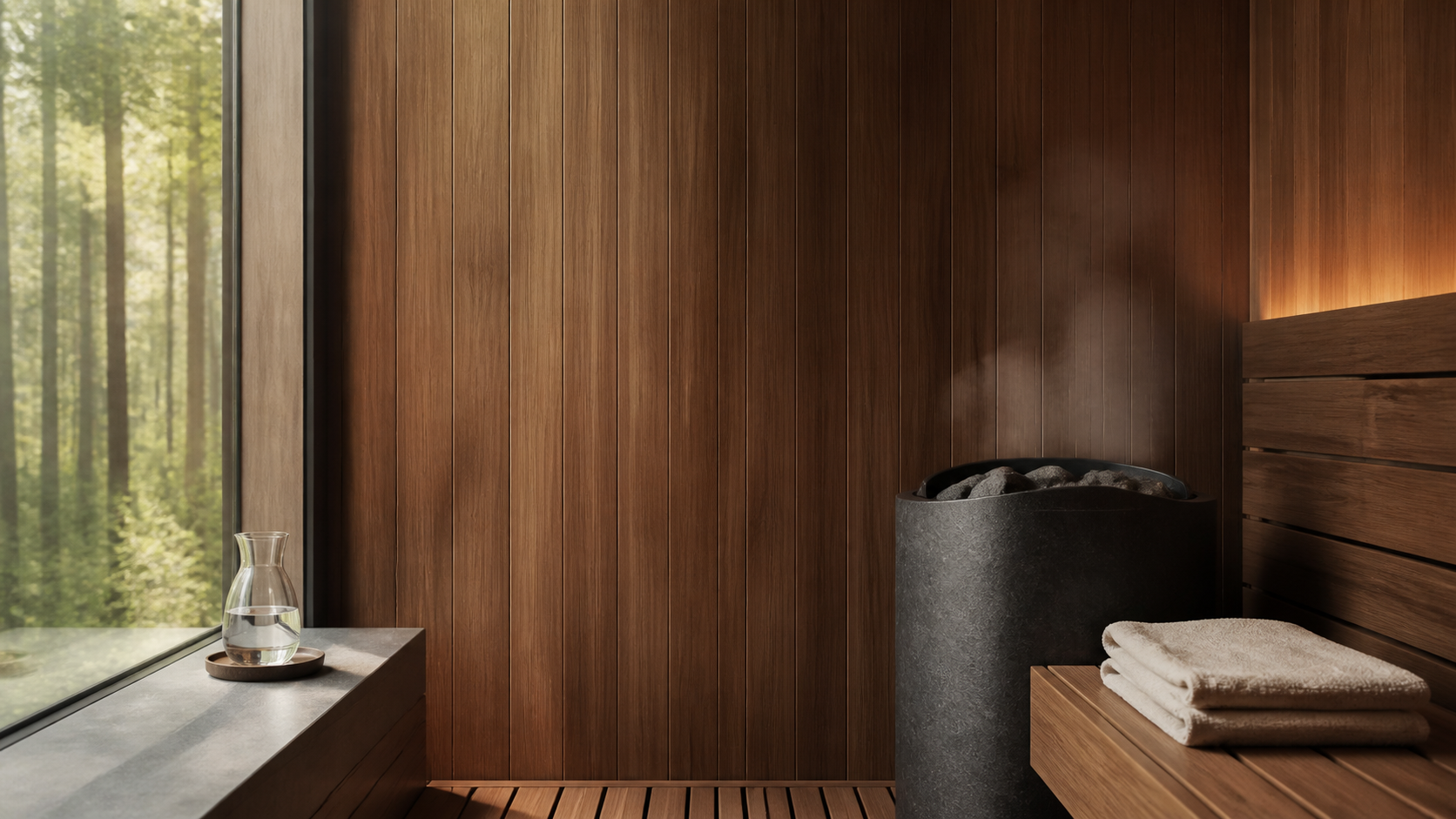
Sauna has moved well beyond the idea of simple relaxation. Research now gives us a clearer view of how repeated heat exposure engages circulation, temperature regulation, immune-cell movement, and inflammatory signaling. Think of sauna as a form of intentional heat conditioning: the body responds to warmth by increasing blood flow to the skin, elevating heart rate, and activating cooling mechanisms.
Inside one session: heat mobilizes immune cells quickly
A 2026 study used a 30-minute exposure at an average of 73°C / 163°F, divided into two 15-minute periods with a brief shower between them, in 51 adults entering a Finnish sauna.
Total white cells and selected subtypes, including neutrophils and lymphocytes, were present in greater numbers in circulation after the session. The pattern reflects redistribution or mobilization: immune cells moving into circulation as the body responds to controlled heat exposure.
The response remained targeted. Immune-cell movement was more pronounced than the change in circulating inflammatory signaling proteins, a focused pattern of immune traffic rather than generalized activation.
The long-term signal: frequent sauna use and respiratory health
Researchers followed 1,935 Finnish men, ages 42 to 61, for a median of 25.6 years. Compared with sauna use no more than once weekly, those reporting 2 to 3 sauna sessions weekly showed a 27% lower observed risk of a hospital-diagnosed respiratory condition, and those reporting 4 or more sessions weekly showed a 41% lower observed risk.
The association remained after adjustment for major respiratory risk factors and other potential confounders. Because the study followed middle-aged Finnish men using traditional sauna, future research will help define how broadly the same effect applies across populations and sauna types.
Consistency in action: regular sauna users experienced fewer colds
In a six-month study of 50 volunteers, 25 used sauna regularly and 25 avoided sauna and comparable heat exposure. The sauna group recorded fewer common-cold episodes, with the difference most apparent during the final three months, when incidence was roughly half that of controls.
The benefit in this study appeared in how often colds occurred, rather than their duration or severity. Although the trial was small, it offers an intriguing experimental signal that complements the larger long-term respiratory findings.
Potential pathways: why repeated heat exposure may matter
Heat widens peripheral blood vessels, increases skin blood flow, and raises cardiac workload during exposure. Repeated heat exposure may support vascular adaptation and works naturally alongside exercise and recovery.
Frequent sauna use has also been associated with lower CRP, fibrinogen, and white-cell levels at rest. This is observational evidence and may reflect multiple health or lifestyle factors, not a guaranteed personal result.
Where the evidence is strongest
The most-cited long-term studies evaluated traditional Finnish sauna habits. Dry sauna, infrared sauna, steam rooms, hot baths, and medically supervised heat therapies differ in temperature, humidity, heat delivery, and the amount of physiological strain.
Each method belongs within the broader category of passive heat exposure. The ideal goal is a consistent, well-tolerated practice, not simply pursuing the highest possible temperature.
Make heat work for you
Hydrate and replace what you lose. Arrive hydrated and rehydrate afterward according to your individual needs. Avoid mixing sauna with alcohol, since both can affect blood pressure, hydration, judgment, and temperature regulation.
Leave before you feel unwell. Lightheadedness, nausea, unusual weakness, chest discomfort, confusion, or feeling excessively hot are reasons to stop and cool down. If you are pregnant, prone to low blood pressure, have cardiovascular or kidney disease, take diuretics or heat-sensitive medications, or have been advised to limit exertion, discuss sauna use with your clinician first.
Let consistency, not intensity, lead. The most compelling research reflects a regular practice over time. When you are acutely ill, febrile, or dehydrated, prioritize rest and return to heat exposure once you have recovered.
27%
Lower observed respiratory risk with 2 to 3 sauna sessions weekly
41%
Lower observed respiratory risk with 4 or more sessions weekly
~50%
Lower common-cold incidence in the sauna group during the final three months
“Sauna is one of the most interesting wellness practices because it produces clear physiological responses and has encouraging long-term data. I want you to understand where the evidence is strongest and how intentional heat exposure can fit confidently into your complete health picture.”
Clinical references
- Heinonen et al. Acute Finnish sauna heat exposure and immune-cell responses. Temperature. 2026.
- Kunutsor et al. Sauna bathing and respiratory-disease risk. European Journal of Epidemiology. 2017.
- Ernst et al. Regular sauna bathing and common-cold incidence. Annals of Medicine. 1990.
- Pach et al. Hot dry air and active common-cold symptoms: randomized trial. Medical Journal of Australia. 2010.
- Kunutsor et al. Sauna bathing, inflammation, and oxidative stress. Annals of Medicine. 2018.
Key takeaways
- Consistent sauna use engages circulation, temperature regulation, and immune-cell movement.
- Long-term Finnish research links frequent sauna use to lower respiratory-disease risk.
- Heat exposure works best as a consistent, well-tolerated practice, not maximum intensity.
Educational only. Not medical advice. This article does not determine eligibility, diagnose, prescribe, change medication use, approve refills, or replace a visit with a licensed clinician.
Have a non-urgent personal question? Book a Wellness Lab visit to discuss your care with Danielle Johnson, FNP-C.
Book a Wellness Lab visitRelated Wellness Lab articles

Can GLP-1 Support Healthier Aging?
What semaglutide studies in specific populations may tell us about heart, kidney, metabolic, and physical-function outcomes — and why muscle matters.
World Wellness Weekend 2026: Sleep, Nutrition, Vitality, Serenity & Solidarity
The 10th annual World Wellness Weekend brought 190 countries together around five connected pillars. Wellness is not one habit — it is a system where sleep, movement, nutrition, stress regulation, and connection support each other.
The September Skin Brief: SNAP-8 And GHK-Cu For Expression Lines And Skin Quality
SNAP-8 is a topical cosmetic peptide used in formulas for expression-prone areas, and it may pair with GHK-Cu when the conversation is smoother-looking skin and a more polished routine. Two peptides, two different roles.