The Biology Of Skin, Hair & Repair: Collagen, Inflammation, Gut & The Hair Cycle
Newsletter issue · 2026-09-05
Collagen, inflammatory signaling, the gut environment, and the hair-growth cycle are not separate conversations. Repair is a sequence: communicate, regulate, rebuild, remodel.
By Wellness Lab.
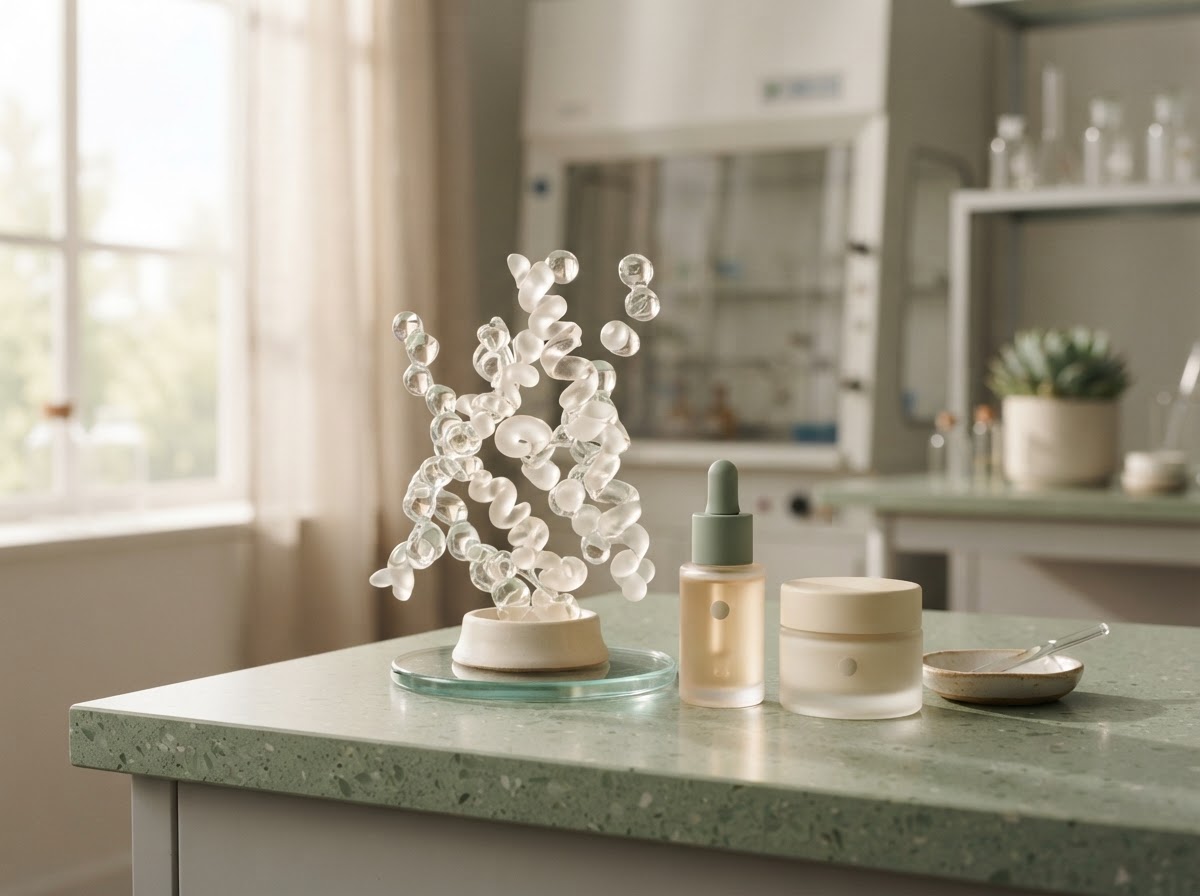
What you see on the surface often reflects a much bigger biological story. Skin texture, collagen integrity, hair quality, tissue recovery, and digestive resilience all depend on coordinated communication between cells. Hormones, nutrient status, immune activity, circulation, stress, sleep, and metabolic health can all influence that environment. That is why the goal is to understand the terrain, identify the signals that may need support, and select a plan that fits the person, not simply the trend.
Four pathways, one connected system
Collagen and matrix: collagen and elastin help create the extracellular framework that gives skin and connective tissue structure. Fibroblast activity, copper-dependent enzymes, nutrition, and remodeling signals all contribute.
Inflammatory balance: inflammation is part of normal repair. The clinical focus is a well-regulated response, enough signaling to begin recovery, followed by an environment that supports rebuilding and resolution.
Gut and barrier health: the intestinal barrier, microbiome, immune system, and nutrient absorption are closely connected. Supporting this terrain can be an important part of a whole-body repair strategy.
Hair-growth cycle: follicles move through growth, transition, rest, and shedding phases. Hormones, stress, rapid weight change, nutrient status, circulation, and inflammatory signals can influence that cycle.
The peptide signaling lens
These compounds are not interchangeable. Each is discussed for a different biological pathway, and the strength of research varies by peptide, formulation, route, and outcome.
GHK-Cu is a naturally occurring copper-binding tripeptide studied for extracellular-matrix signaling, collagen and glycosaminoglycan synthesis, tissue remodeling, and the follicle environment.
KPV is a three-amino-acid fragment researched for its interaction with inflammatory pathways and intestinal epithelial signaling, primarily in cellular and preclinical models.
BPC-157 is studied largely in preclinical models involving gastrointestinal integrity, blood-vessel signaling, and repair across connective tissues. TB-500 is discussed in connection with thymosin-β4 pathways involved in cell migration, angiogenesis, extracellular-matrix remodeling, and repair signaling.
Research maturity varies across these compounds and outcomes. Biological familiarity does not establish safety or superiority, and peptides can themselves be pharmaceuticals. All require clinical evaluation before any use.
How the options fit: choose by priority, not popularity
A focused conversation around copper-peptide signaling, collagen, skin quality, and the follicle environment may center on GHK-Cu. A combined approach may be considered when skin, collagen, recovery, and broader repair priorities overlap. A layered option may be considered when gut, inflammatory, tissue, skin, and hair goals belong in the same clinical plan.
Exact formulations can vary. Your health history, symptoms, goals, current therapies, and clinical appropriateness determine which option, if any, fits your plan.
A protocol should begin with a clinical conversation
Tell us whether your priority is skin, hair, gut, inflammation, recovery, or a combination. Your history, symptoms, goals, current therapies, and relevant laboratory data help guide the decision.
If a peptide protocol is clinically appropriate, the next step is to select the option that best matches your priorities and establish follow-up. The most visible goals still deserve a whole-body plan.
“When someone comes to me for skin or hair support, I also want to understand inflammation, digestion, hormones, nutrition, stress, sleep, and metabolic health. Peptides can be one valuable layer, but the best plan is the one that connects the signal to your full clinical story.”
Clinical references
- Systematic Review: The Regenerative Potential of GHK-Cu in Aesthetic Medicine
- Pickart & Margolina: GHK and Tissue Remodeling
- Dalmasso et al.: KPV, PepT1, and Intestinal Inflammatory Signaling
- Seiwerth et al.: BPC-157 and Gastrointestinal / Connective-Tissue Healing Models
- Goldstein & Kleinman: Thymosin-β4 Repair and Regenerative Pathways
- Xing et al.: Thymosin-β4 Signaling, Inflammation, and Tissue Repair
Key takeaways
- Skin, hair, collagen, gut, and inflammation are connected repair conversations, not isolated symptoms.
- Peptide research maturity varies by compound and outcome; familiarity does not establish safety or superiority.
- Any peptide plan belongs inside a clinician-guided, whole-body strategy with follow-up.
Educational only. Not medical advice. This article does not determine eligibility, diagnose, prescribe, change medication use, approve refills, or replace a visit with a licensed clinician.
Have a non-urgent personal question? Book a Wellness Lab visit to discuss your care with Danielle Johnson, FNP-C.
Book a Wellness Lab visitRelated Wellness Lab articles

Can GLP-1 Support Healthier Aging?
What semaglutide studies in specific populations may tell us about heart, kidney, metabolic, and physical-function outcomes — and why muscle matters.

Would You Know Where Your Peptides Came From?
A circulating investigation has put peptide sourcing in the spotlight. What the label cannot tell you — and the five sourcing questions every patient deserves to have answered.

World Mental Health Day: A Calmer Mind, A Clearer Day, And The Limits Of Peptide Research
World Mental Health Day is a reminder that mental health is health. Selank and Semax have been studied in limited human research, but the evidence base remains limited and clinical benefit is not established — they are not a substitute for psychiatric care.